Journal ·
Working Remotely from Bali: A Practical 2026 Guide
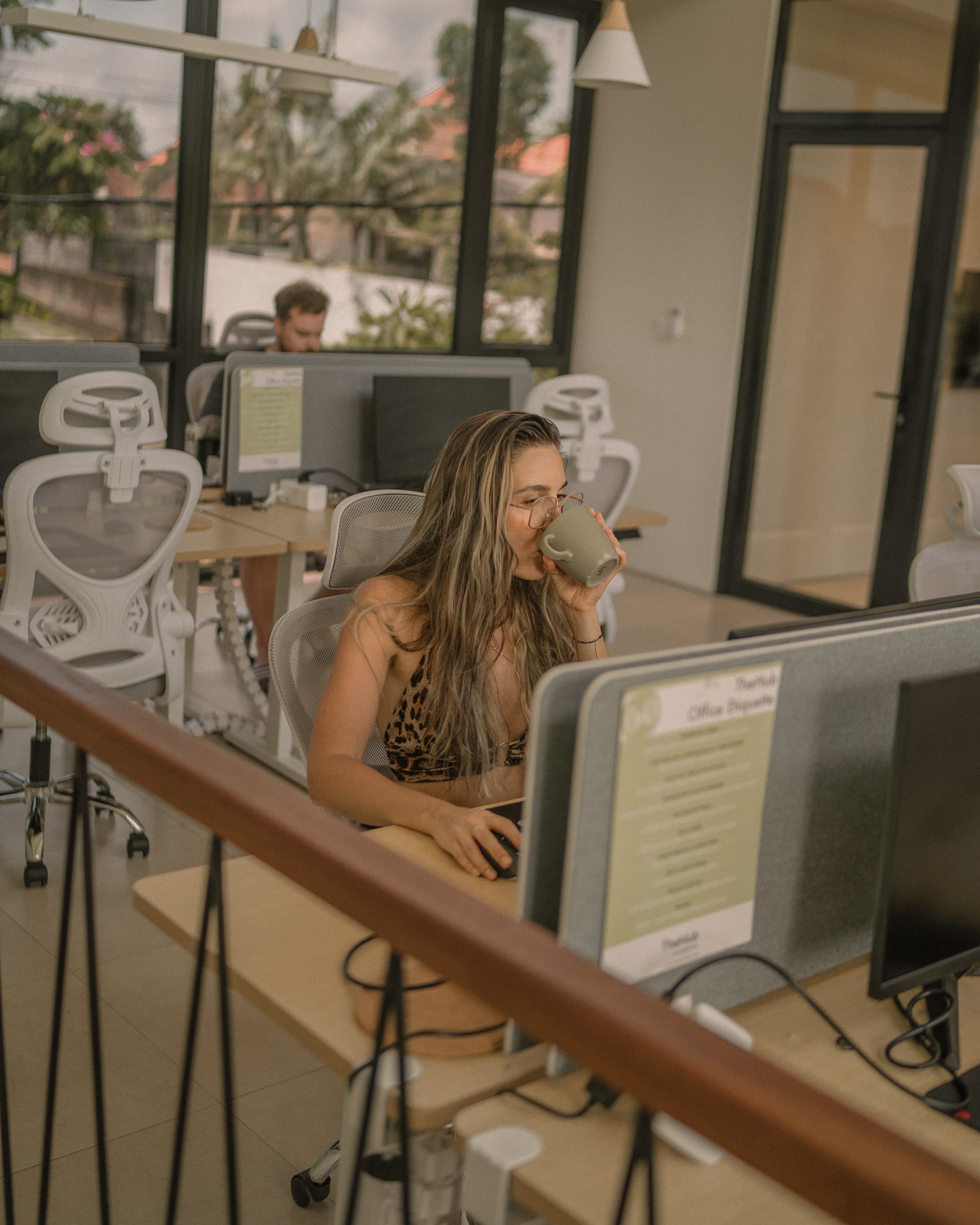
Working remotely from Bali in 2026 is genuinely achievable, but the gap between a stay that works and one that doesn't usually comes down to a handful of decisions made before the flight. The wrong visa, the wrong neighbourhood for how you actually work, or accommodation with internet that falls apart during your morning stand-up can derail the whole thing. Get those three right and the rest is detail. Get them wrong and you'll spend your first week troubleshooting instead of working.
The Pererenan and Canggu corridor has become the natural anchor point for remote work in Bali. The concentration of coworking infrastructure, cafés, and purpose-built accommodation here is the highest on the island, and it keeps growing because the demand is real. Properties like TheHub Pererenan exist precisely because remote workers need more than a desk crammed into a hotel room. This guide covers what you need to know before you land: visa routes, neighbourhoods, internet, monthly costs, accommodation options, and the tax basics Australians tend to overlook.
Working remotely from Bali: getting the visa right
Bali does not have its own immigration rules. All Indonesian visa regulations apply nationally, and the choice of entry category matters more than most people expect. A standard tourist visa or visa on arrival is not a legal basis for carrying out remote work from Indonesia. That distinction has consequences.
The E33G remote worker KITAS
The E33G is Indonesia's dedicated remote worker residence permit, valid for up to one year and designed specifically for people who earn income from entities outside Indonesia. Core requirements include a foreign employer contract or equivalent, a minimum annual foreign income of US$60,000, three months of bank statements showing at least US$2,000, a valid passport, CV, and travel itinerary. Indonesian clients and Indonesian-source income are not covered under this category. The government fee is approximately IDR 7 million, excluding any agent costs; agent service packages commonly bring the total to IDR 13 to 18 million. Online approval generally takes 7 to 14 business days, with KITAS card issuance a further 2 to 4 weeks after arrival.
The B211A visit visa for shorter stays
For stays under six months or for remote workers who cannot meet the E33G income threshold, the B211A provides a multi-entry visit visa extendable to 180 days. It is not the dedicated long-term remote work route and does not expressly authorise remote work for a foreign employer. It is used in practice by many nomads, but that reflects enforcement tolerance rather than legal permission. Verify the specific permitted activities for your subcategory through Indonesia's official e-Visa portal before relying on it for work.
The E33G requirements and fees do change, and private websites sometimes mix official rules with practical guidance. Check the current checklist directly on the official Indonesian e-Visa portal rather than relying on third-party summaries. If the E33G documentation feels complex, engaging a reputable Indonesian immigration agent is worth the cost.
Working remotely from Bali: which neighbourhood fits how you actually work
Every nomad neighbourhood in Bali represents a trade-off between social energy and quiet focus. The right base depends on whether your work needs long, uninterrupted blocks or a network of people around you. There is no universally correct answer, but there is a correct answer for your working style.
Canggu and Pererenan: the social coworking corridor
Canggu has the highest density of coworking spaces, laptop cafés, fitness studios, and networking events in Bali. That concentration is its main advantage and its main problem: noise, traffic, and a transient crowd can erode the focus that remote work requires. Pererenan sits at the quieter residential edge of the Canggu corridor, offering the same access to cafés, surf, and social infrastructure but with a more grounded daily rhythm and fewer distractions. For remote workers who want genuine work infrastructure without commuting across town, Pererenan occupies a practical middle ground.
Ubud: deep work and a slower pace
Ubud appeals to writers, developers, and designers who prioritise uninterrupted concentration. The pace is slower, the surroundings are greener, and late-night distractions are fewer. Internet is generally reliable at established coworking spaces, with measured speeds of 50 to 150 Mbps at reputable venues. The trade-offs are real: no beach, a longer airport trip, and a smaller coworking scene than Canggu. If your work requires four-hour blocks without interruption and you don't need ocean access, Ubud is worth considering seriously.
Sanur and the other areas worth knowing
Sanur is a calm, walkable option that suits older professionals and those who value proximity to Denpasar and the airport over a dense coworking scene. Its beachfront is accessible on foot and the streets are quieter than Canggu. Seminyak works well for those who prioritise dining and lifestyle over workspace density, but it has fewer dedicated coworking venues and higher accommodation costs. Uluwatu is a surf-first location; the coworking infrastructure is weaker and transport for errands adds friction to daily routines.
Internet and coworking: what to actually expect
Bali's internet reputation is mixed, and the gap between a good coworking space and a typical villa connection is significant. Planning around that gap in advance is the difference between reliable video calls and a frustrating scramble for a backup connection mid-meeting.
Realistic speed expectations by setup
At established coworking spaces in Canggu, measured download speeds typically sit between 80 and 200 Mbps. Ubud coworking venues generally deliver 50 to 150 Mbps. Villa and apartment connections vary considerably: 10 to 50 Mbps is common, with real variation by property and street. Café connections are often adequate for light tasks but drop under congestion during peak hours (roughly 10:00 to 14:00 Bali time). For regular video calls and screen sharing, target at least 50 Mbps and confirm the upload speed specifically, since upload matters more than download for video calls. Verify that the space has a backup connection or automatic failover before you pay for a membership.
SIM cards and mobile backup
A Telkomsel prepaid SIM is the most reliable mobile backup: it has the strongest island-wide coverage, including areas where other networks weaken. A 30 to 50 GB package costs roughly IDR 100,000 to 200,000; postpaid plans around 100 GB run approximately IDR 250,000 to 350,000 per month. Buy from an official carrier shop, register the SIM properly, and test tethering at your accommodation before you rely on it for work. The practical setup is coworking Wi-Fi as your primary connection and Telkomsel tethering as a backup.
Before committing to a coworking membership, run a speed test during peak hours (not just when the space is quiet), ask whether there are two separate internet providers or automatic failover, confirm backup generator coverage, check for Ethernet access and call booths, and take a day pass first. One afternoon of testing tells you more than any listing description.
What a realistic month in Bali actually costs
Cost varies significantly by neighbourhood, lifestyle, and how you book accommodation. The figures below assume a comfortable solo nomad lifestyle: accommodation, food, transport, coworking, utilities, insurance, and reasonable leisure. Frequent Western meals, beach clubs, and premium wellness push costs well above these ranges.
A comfortable lifestyle in Canggu typically runs $1,400 to $2,300 per month. Ubud and Sanur are generally cheaper, sitting around $1,000 to $1,800. Seminyak tends toward $2,000 to $2,800 or more once dining and lifestyle costs are included. Short-term villa rentals in Canggu run $120 to $350 per night; annual leases for a modern one-bedroom in the same area typically run $700 to $1,800 per month. In Pererenan, annual one-bedroom leases commonly sit between $665 and $970 per month at current exchange rates, with short-term pricing carrying a 20 to 40 per cent premium over the annualised rate.
Boutique co-living with coworking infrastructure included changes the comparison because it bundles the workspace cost into the accommodation fee. That removes a layer of separate decisions and sidesteps the common mistake of booking comfortable accommodation with no usable workspace. Paying separately for coworking on top is an easily avoided extra cost when you plan ahead.
Where to stay: co-living versus apartments versus boutique hotels
The most common accommodation mistake in Bali is choosing somewhere comfortable but unworkable, then scrambling to find a coworking space nearby. For first-time arrivals who haven't yet scouted the neighbourhood, a well-designed co-living property with guaranteed work infrastructure removes the biggest variable from your planning.
Good co-living infrastructure means a private studio with an ensuite bathroom (not a dorm), reliable fibre wifi included without a separate fee, a dedicated coworking floor with proper workstations and meeting rooms, and a setup that is never open to day-pass visitors. That last point matters: a coworking floor that sells day passes fills up and gets noisy, which defeats the purpose of having it on-site.
TheHub Pererenan: purpose-built for remote workers
TheHub Pererenan is a concrete example of this model in Pererenan. According to the property, it offers eight private studios, each with a kitchenette, ensuite bathroom, smart TV, and fibre wifi included. Beneath them sits a guests-only coworking floor with ergonomic workstations, dual monitors, adjustable desks, meeting rooms, free coffee, and no day passes, meaning the workspace is reserved exclusively for guests on the property. A pool sits in the central courtyard, and the rooftop includes a dining table, sofa lounge, and yoga space overlooking Pererenan's palm-lined rooftops and rice paddies beyond.
The property is located in Pererenan, within reach of the beach and the broader Canggu corridor. Weekly and monthly rates are available on direct booking. Whole-property buyout is available for small teams and startup offsites. The property carries strong guest ratings on major booking platforms, verify current scores and availability directly with TheHub Pererenan before booking. To check availability and rates, reach out directly or search for TheHub Pererenan online.
Tax, compliance and the legal side of a long stay
This section covers the basics to build awareness, not to replace professional advice. The tax implications of a long Bali stay are frequently underestimated by Australians, and getting them wrong across two tax systems is expensive.
Australian tax residency when you leave
Becoming an Australian non-resident for tax purposes is not automatic when you travel. The ATO examines residence, domicile, intention, family ties, economic connections, and whether a permanent place of abode has been established abroad. Spending more than 183 days overseas does not by itself change your residency status. Australian tax residents are generally taxed on worldwide income, including salary or freelance income earned while physically in Bali. Retaining an Australian home, family, employment, or other strong connections typically supports continued Australian residency, regardless of how long you spend abroad.
Indonesia's 183-day threshold
Spending more than 183 days in Indonesia during a relevant 12-month period can create Indonesian tax residency, which typically requires filing an Indonesian return and reporting worldwide income. Holding an E33G KITAS may have additional implications depending on how Indonesian tax authorities treat the permit. The Australia-Indonesia tax treaty reduces but does not eliminate double taxation risk: it allocates taxing rights and provides mechanisms for credits, but requires proper documentation and sometimes residency certificates to activate those protections.
Get independent tax advice in both Australia and Indonesia before crossing the 183-day mark. Immigration status and tax residency are separate questions. The E33G permits you to reside in Bali legally; it does not determine your tax position. A professional review costs considerably less than resolving a compliance problem across two tax systems after the fact.
Plan it properly and it genuinely works
Working remotely from Bali in 2026 rewards preparation. The visa choice, the neighbourhood, the internet setup, the accommodation, and the tax position are the five decisions that determine whether the stay is productive or frustrating. Lock those in before you fly and the daily rhythm falls into place: a proper workspace downstairs, a private studio upstairs, and a beach not far away.
Pererenan offers a quieter, more grounded alternative to the heart of Canggu without sacrificing beach access, café culture, or coworking infrastructure. For remote workers and small teams who want both a reliable workspace and a comfortable private living space under one roof, TheHub Pererenan is worth exploring. If you're planning your workation, reach out to the team directly to check availability and get started.
Frequently asked questions
Can I work remotely from Bali on a tourist visa?
No. A standard tourist visa or visa on arrival does not authorise remote work from Indonesia. The E33G Remote Worker KITAS is the dedicated route for remote workers earning foreign-source income. The B211A visit visa is used in practice but does not expressly permit remote work for a foreign employer.
How much does the E33G visa cost in 2026?
The government fee is approximately IDR 7 million for one year. Agent service fees are additional and commonly bring the total package to IDR 13 to 18 million. Confirm the current fee schedule directly on Indonesia's official e-Visa portal before applying.
Is the internet in Bali fast enough for regular video calls?
At established coworking spaces in Canggu and Ubud, yes. Measured speeds at reputable venues typically sit between 50 and 200 Mbps. Villa and apartment connections vary widely. Carry a Telkomsel SIM as a backup and confirm upload speeds (not just download) before committing to any workspace.
What is the cheapest neighbourhood for a comfortable remote work setup?
Ubud and Sanur generally offer the lowest monthly costs, ranging from roughly $1,000 to $1,800 per month for a comfortable lifestyle including accommodation, food, coworking, and transport. Canggu is more expensive but has the densest coworking infrastructure.
Do I need to pay tax in both Australia and Indonesia on a long stay?
Potentially yes, depending on your length of stay, visa type, Australian residency status, and how the Australia-Indonesia tax treaty applies to your income. This one genuinely depends on your personal situation, it is worth putting to a tax adviser in both countries, not something to resolve from a general guide. Speak to a professional before the 183-day threshold.